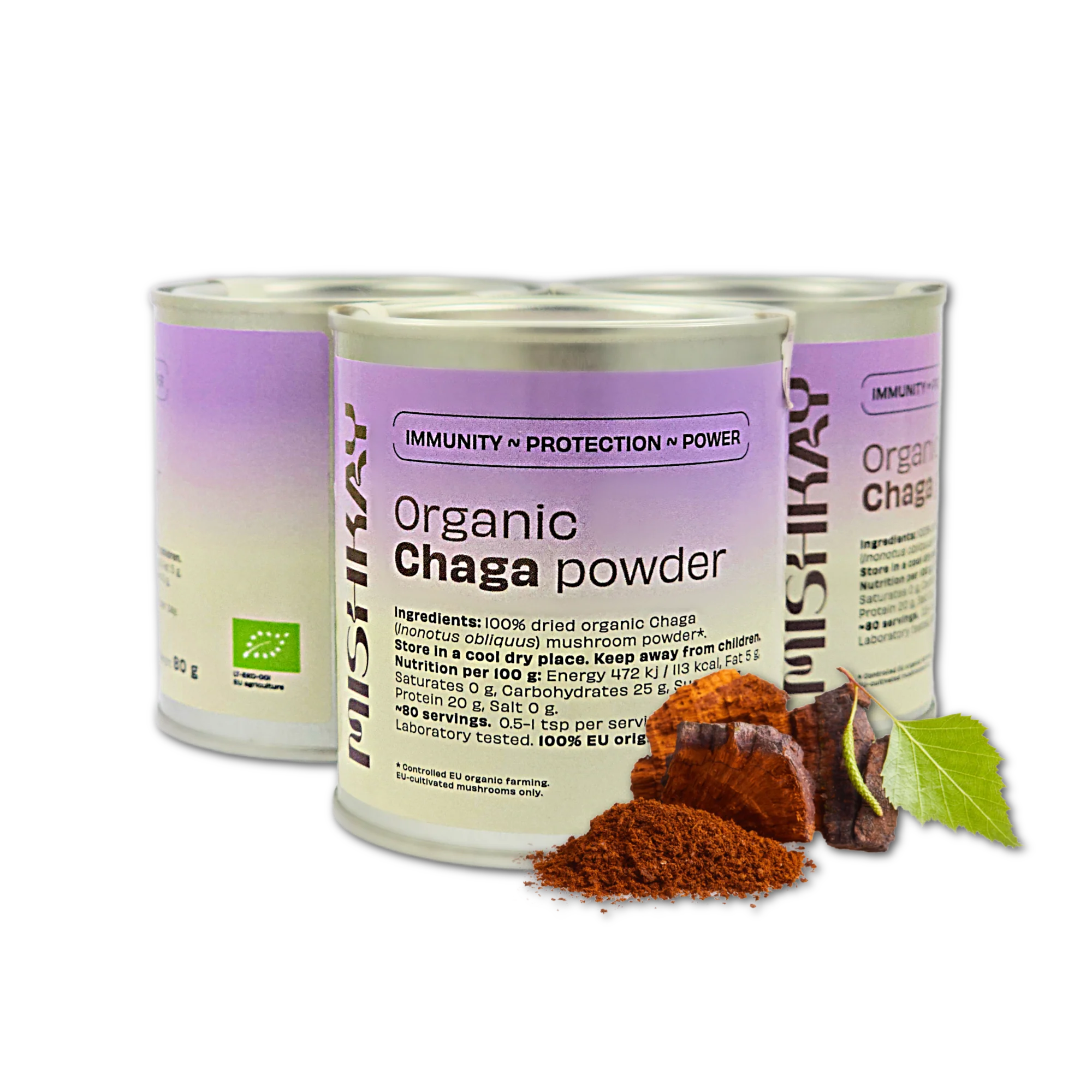
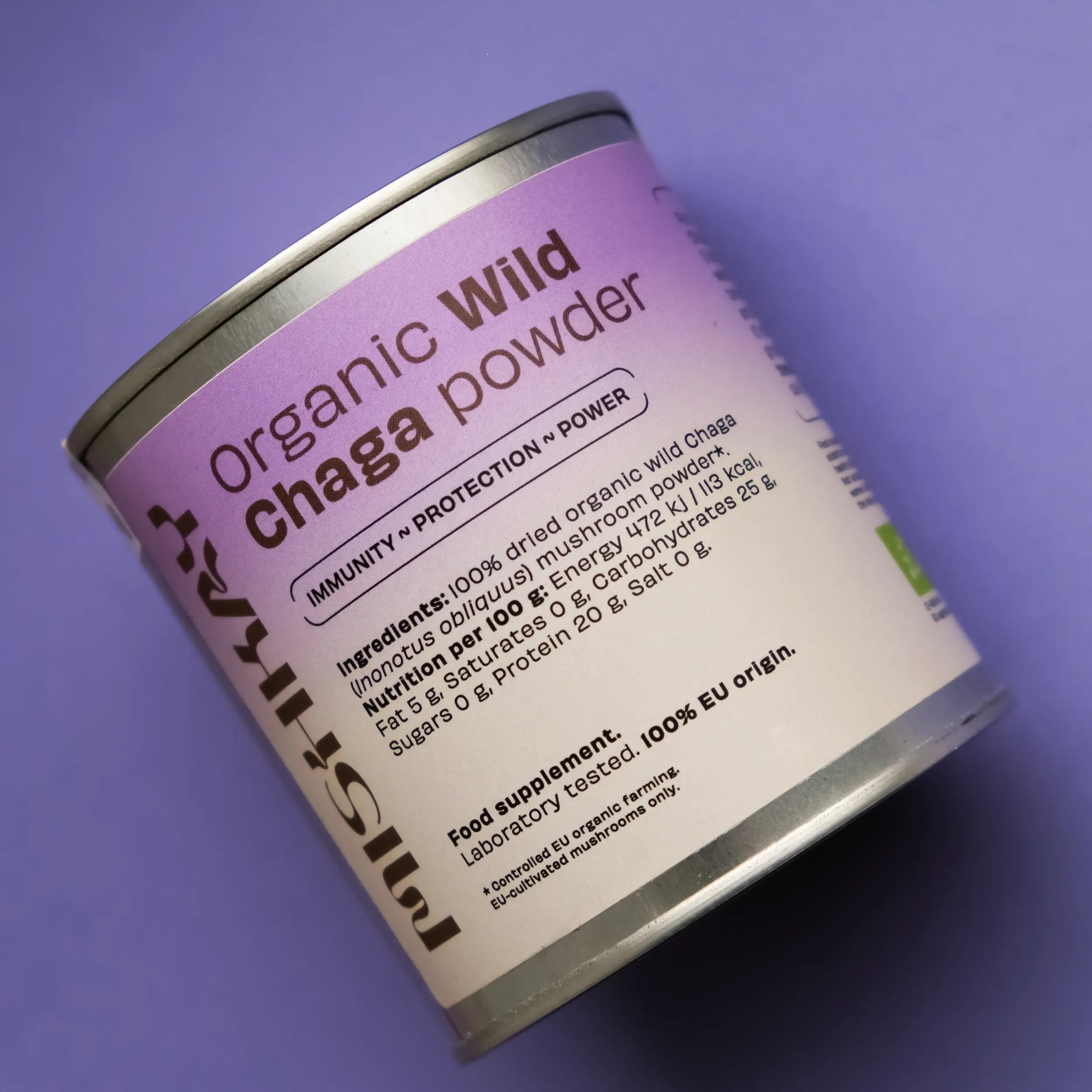
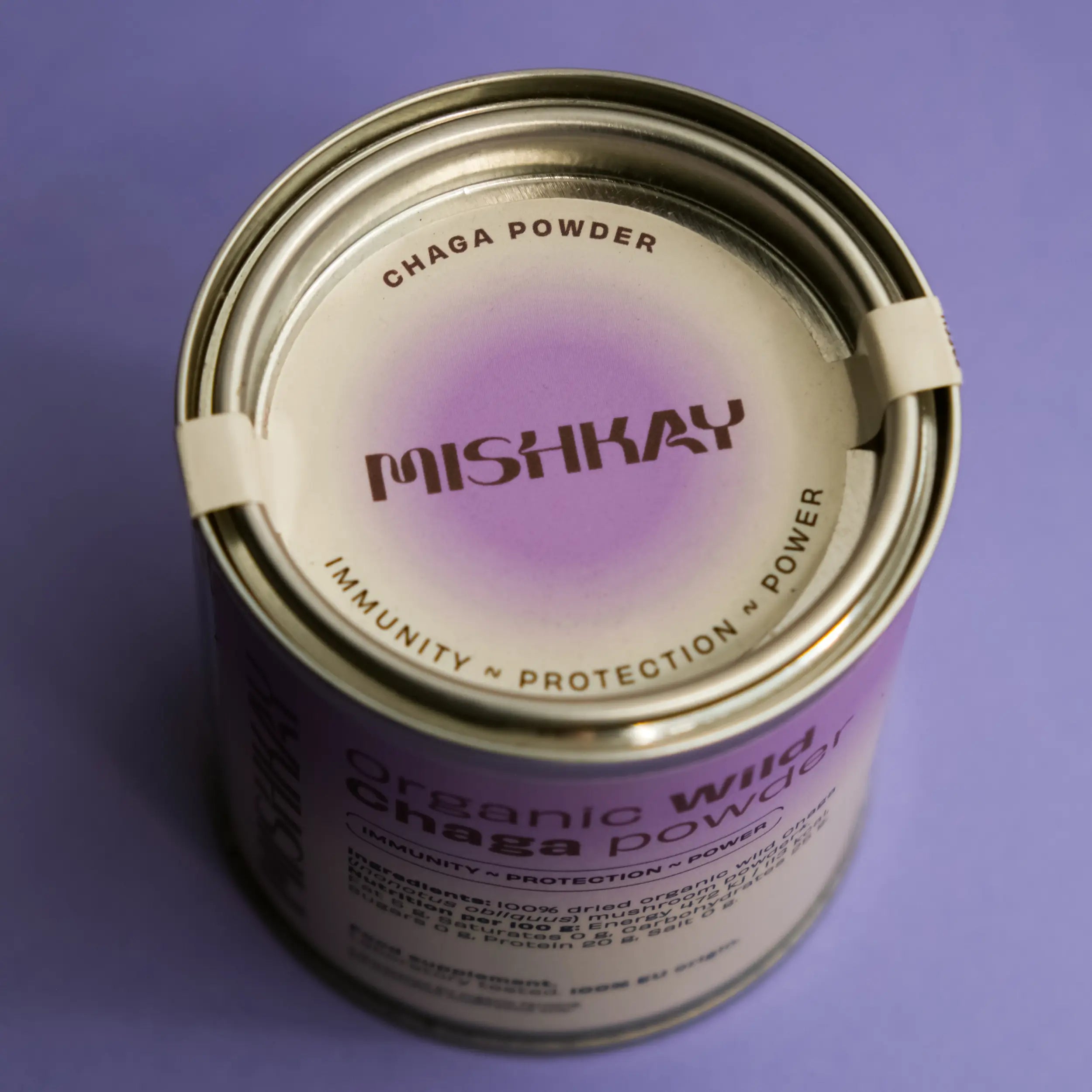
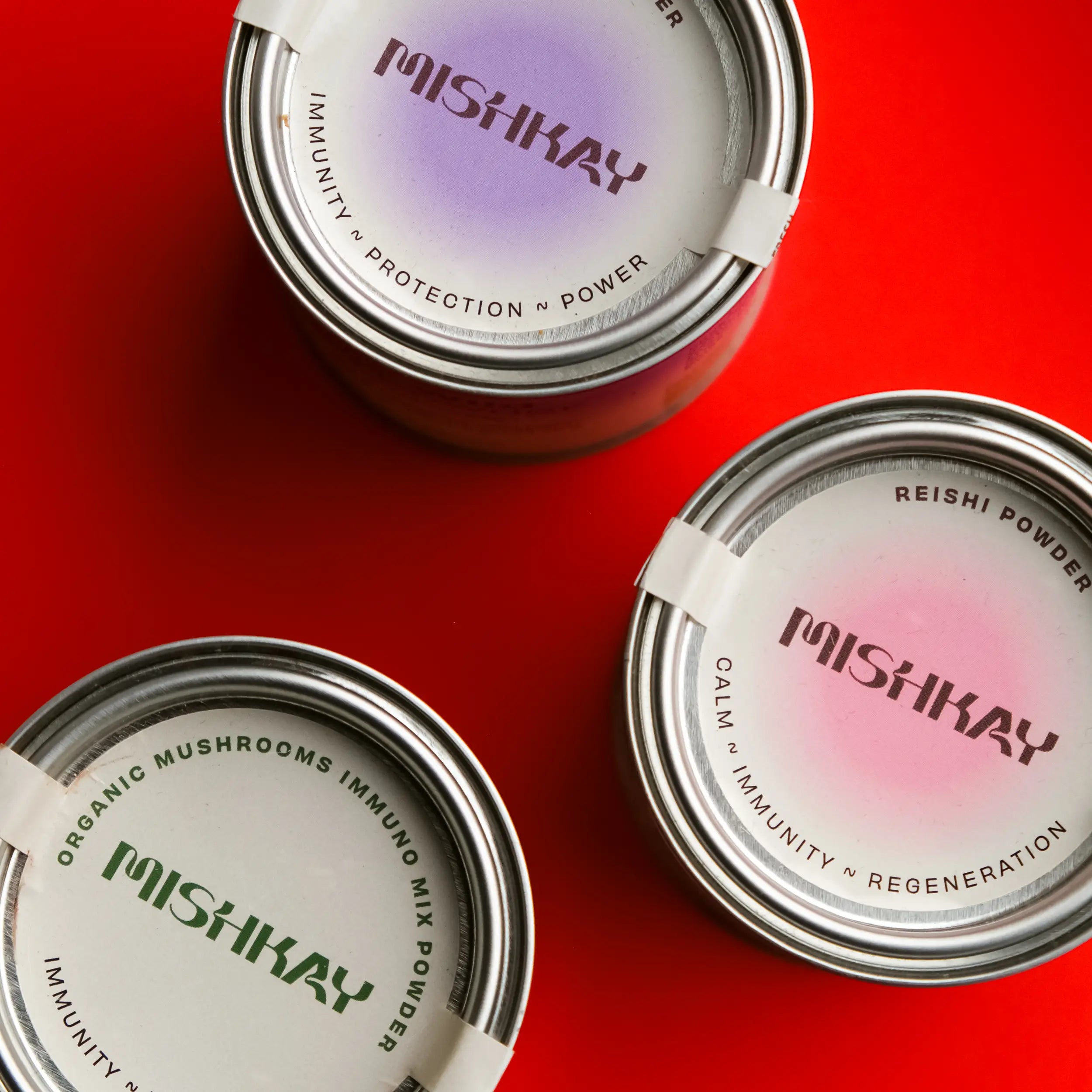
Organic Chaga Powder, 80g.
30 days supply
 ImmunityProtectionPower
History shows that Chaga (Inonotus obliquus) has been used for centuries across Siberia and other parts of Asia as a powerful immune booster. Despite its unappealing appearance, this mushroom is rapidly gaining popularity in the West for its health benefits.
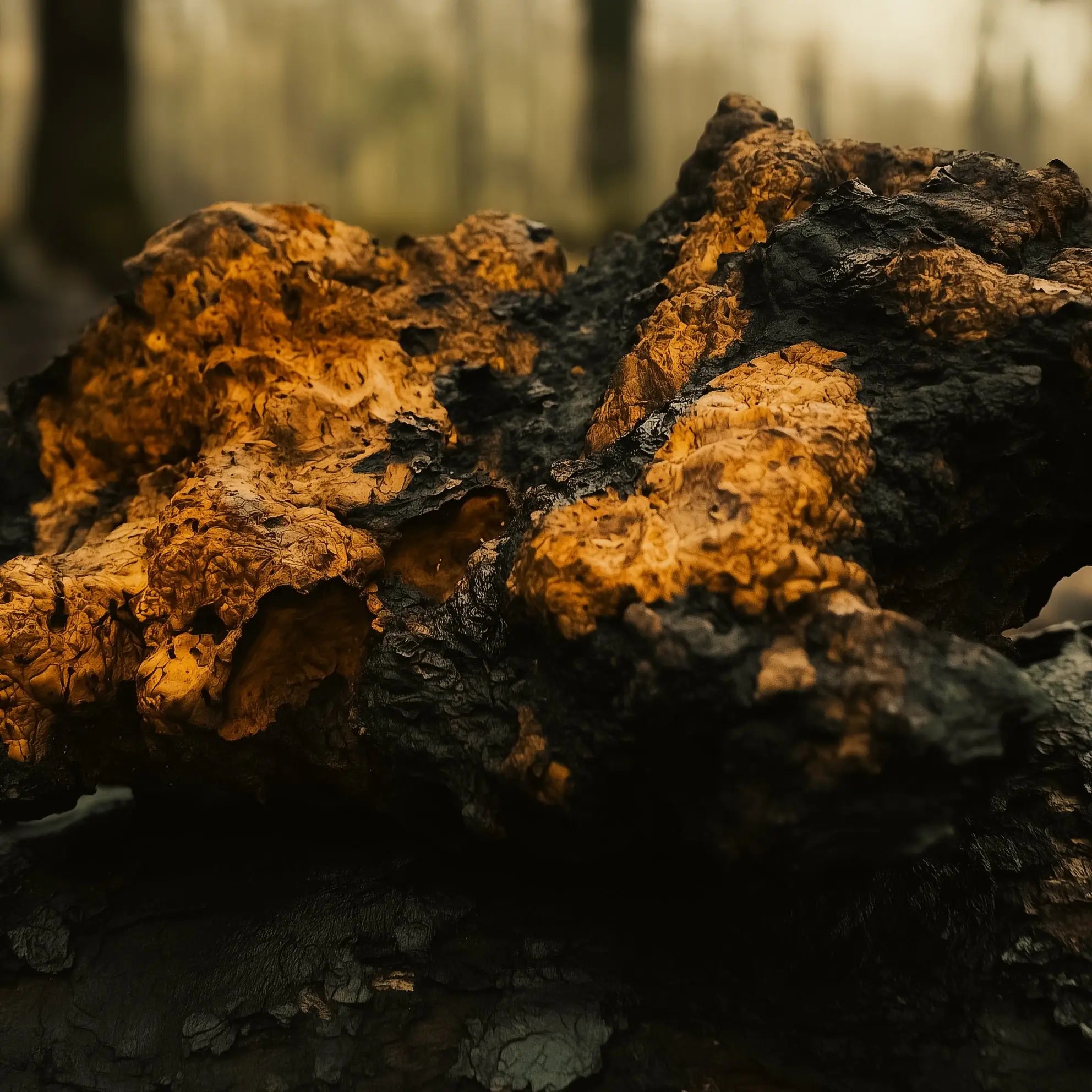
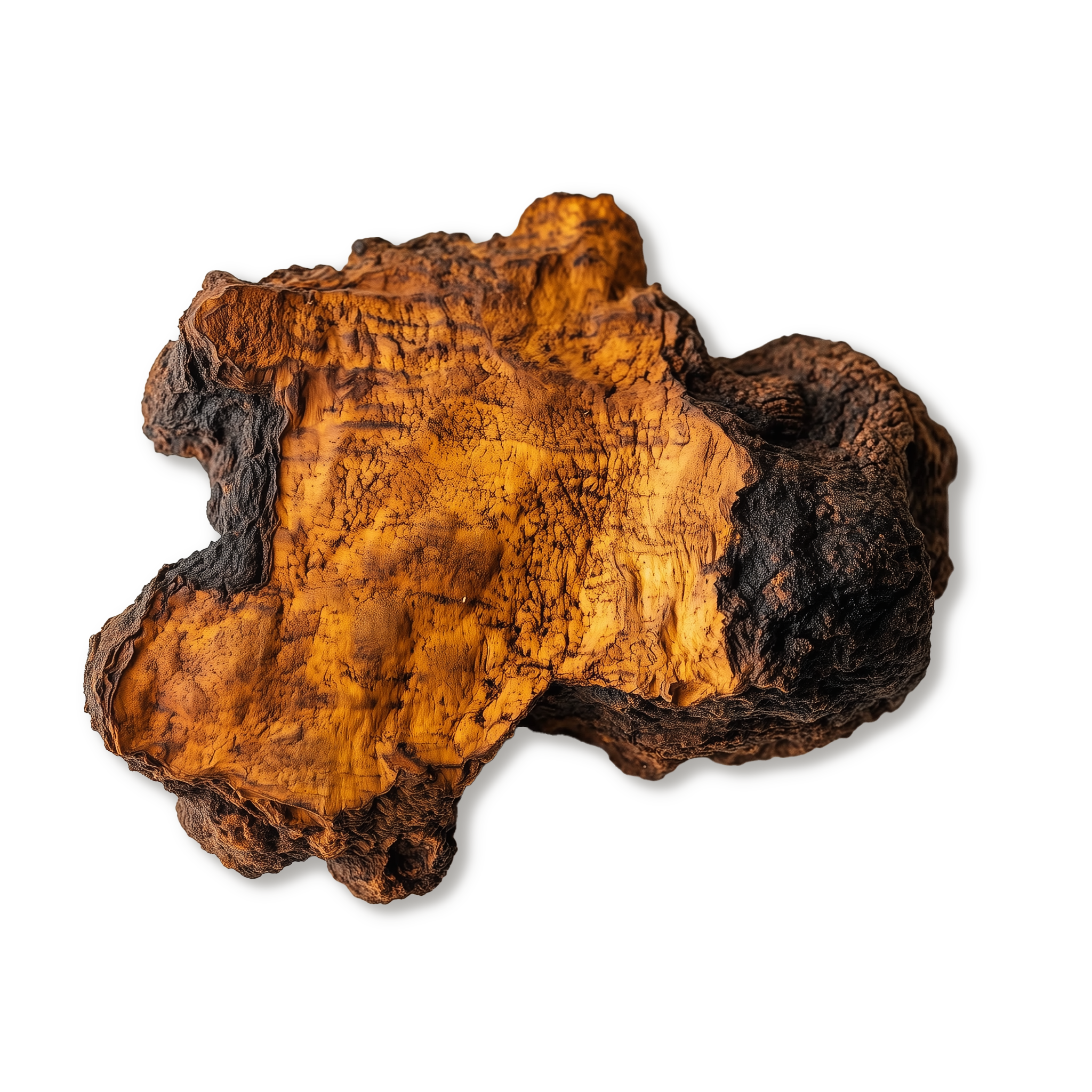
Chaga resembles a woody growth or a burl, often looking like a piece of burnt charcoal reaching 25–38 cm in size. However, inside this rugged exterior lies a relatively soft, orange-hued core.
Did you know that a single cup of Chaga tea is packed with antioxidants? Chaga (Inonotus obliquus) belongs to the Hymenochaetaceae family and typically grows on birch trees in cold climates, such as Northern Europe, Siberia, Russia, Korea, Northern Canada, and Alaska. While it is most common on birches, this uniquely shaped fungus can also be found on other deciduous trees, including alder and rowan.
Traditionally, Chaga is ground into a powder to prepare infusions and teas. It is low in calories, high in fiber, and rich in antioxidants. Additionally, Chaga contains beneficial compounds such as beta-glucans, melanin, and triterpenes like betulin and betulinic acid.
This natural superfood is an excellent choice for those seeking a potent, plant-based source of antioxidants.

Key Benefits: Supports the immune system and liver function, acts as a potent antioxidant, protects cells from oxidative stress, combats free radicals, boosts energy, and promotes digestive wellness.
Caution: Not recommended for individuals with hypotension (low blood pressure).
Ingredients: 100% organic Chaga Mushroom Powder (Inonotus obliquus), sourced from EU organic farming.

Certified according to: LT-EKO-001
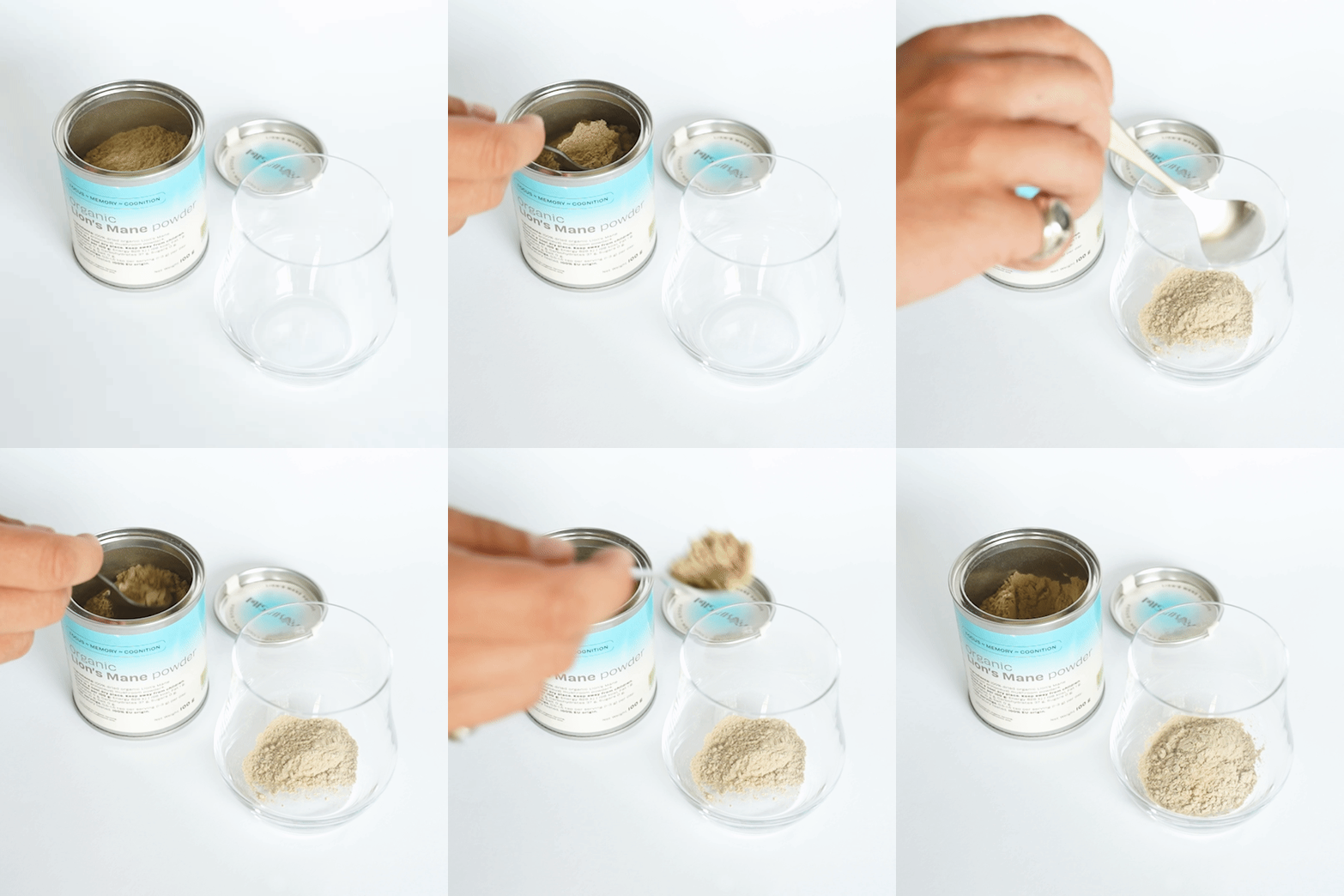
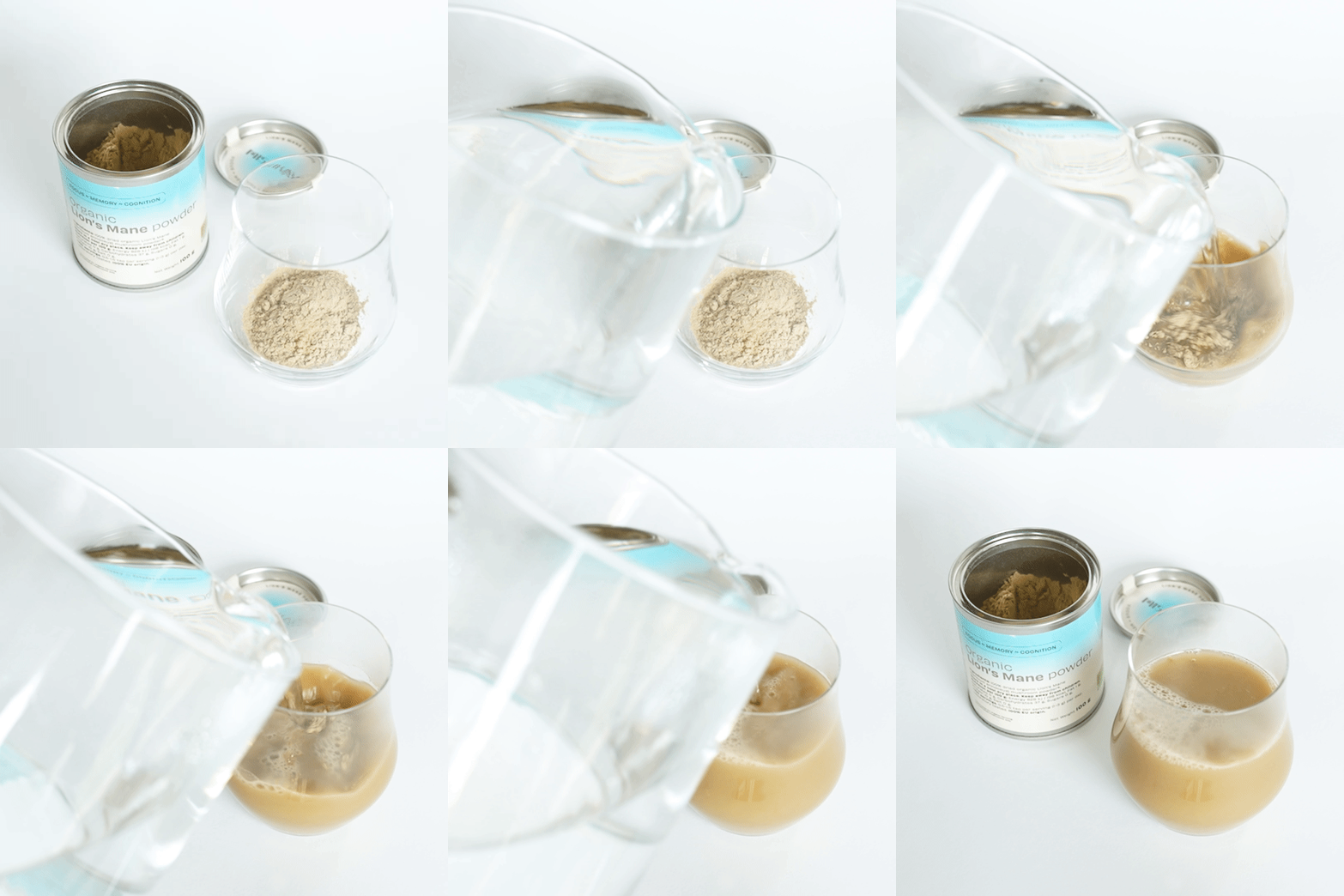
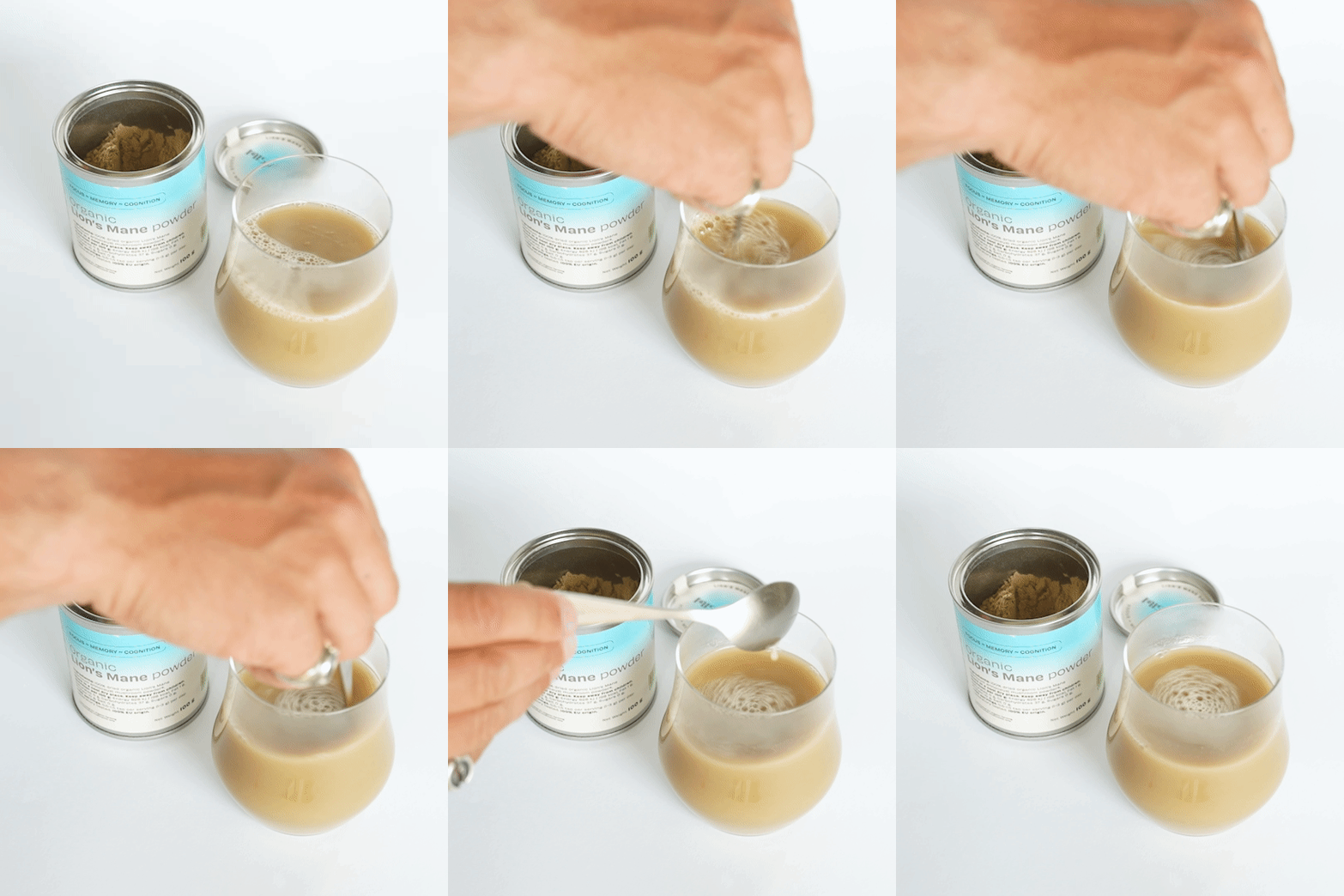
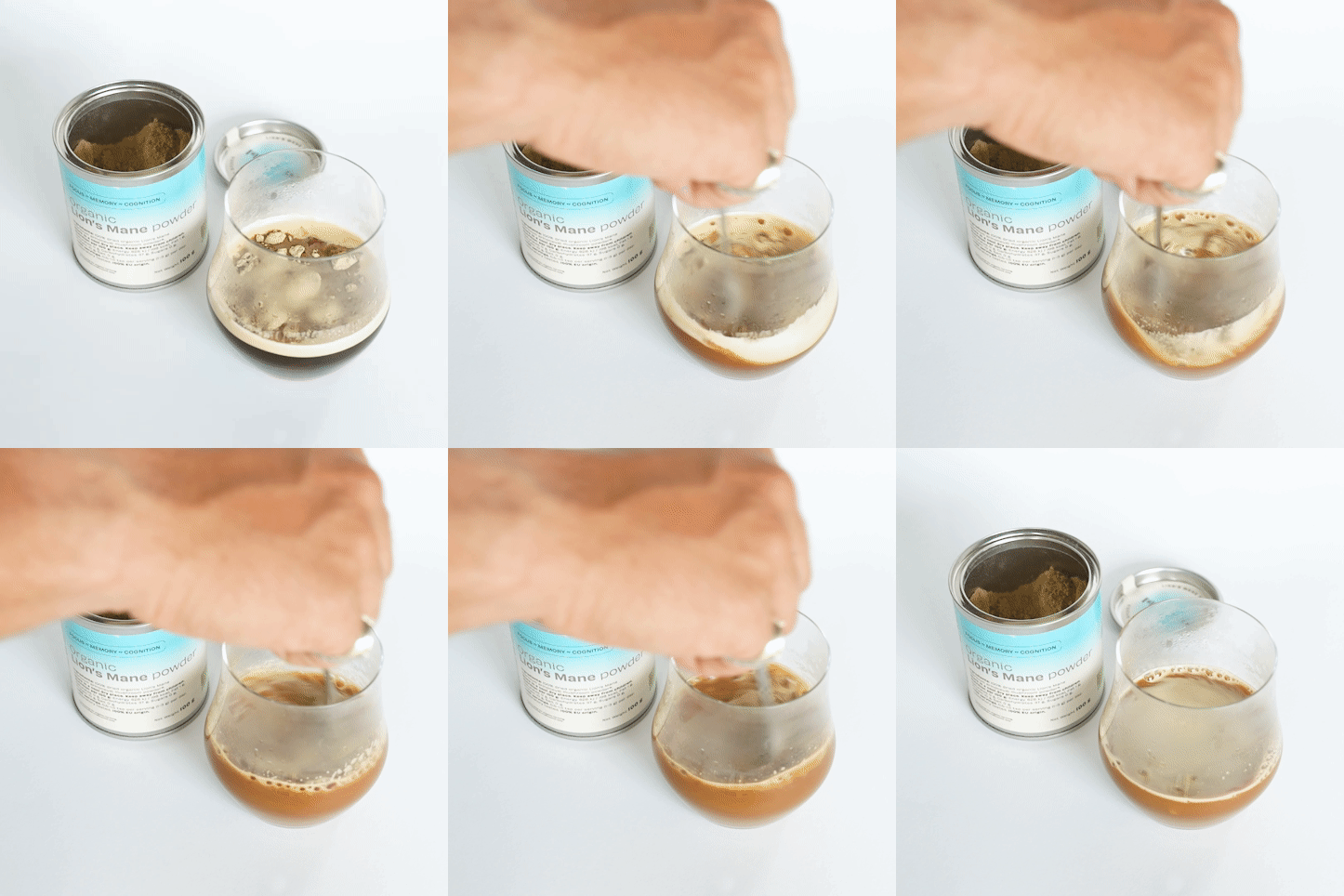
Directions for use: Add 1–2 scoops of powder to hot (not boiling) water. Cover and steep for about 10 minutes, then strain before drinking. The recommended daily dose is up to 6 g (1 scoop = 2 g).
Both Chaga powder and chunks make a delicious tea. Feel free to enhance the flavor with a bit of honey, lemon, or ginger.
Warning: Do not exceed the recommended daily dose. The food supplement should not be used as a meal replacement. A varied and balanced diet and a healthy lifestyle are important. Not recommended for pregnant and breastfeeding women.
Best before: see on the packaging
Batch No.: see on the packaging
Storage conditions: store at room temperature, in a dry place, protected from direct sunlight and out of reach of children.
Net content: 80 g
Country of origin: EU (Baltic countries)
Seller UAB MISHKAY Biotech
Statybininku str. 9C
Moletai, Lithuania
The History of Chaga
Known as the "Gift from God" or the "King of Medicinal Mushrooms," Chaga (Inonotus obliquus) has been revered for millennia across Russia, Korea, Eastern and Northern Europe, the Northern US, and Canada. This remarkable fungus has been used for medicinal, ritualistic, and even recreational purposes throughout the Northern Hemisphere. In some cultures, it was even consulted for divination.
The history of Chaga is steeped in myth and fascinating folklore, making it as intriguing as it is beneficial. Its legacy spans thousands of years:
Ancient Beginnings: Ötzi the Iceman, who lived around 3400 BCE, was discovered frozen in ice with Chaga in his pouch. It is believed he carried it to help kindle fires.
The King of Herbs: Shen Nung, the father of Chinese medicine, is credited with introducing agriculture and acupuncture to China around 2696 BCE. In the Pen-ts'ao Ching—the oldest documented Chinese pharmacopeia—he cataloged 365 medicines derived from minerals, plants, and animals. Among them, he included Chaga, crowning it the "King of Herbs".
Siberian Traditions: Historical records show that the Khanty people (formerly known as Ostyaks) of Western Siberia were using Chaga by the 12th century. They would place the mushroom into a fire and, while still smoldering, plunge it into hot water to create a potent infusion.
First Nations Wisdom: Indigenous peoples of North America were among the first to use Chaga for its healing properties, respecting the deep wisdom of the birch tree and its fungi. This pitch-black mushroom was used in pipe ceremonies for its sweet, pleasant aroma and was even utilized in spiritual divination.
Royal Endorsements: In Russia, Chaga has been used to treat various ailments since the 16th century. Historically, Grand Duke Vladimir Monomakh of Kievan Rus famously used Chaga to treat tumors of the lip.
Modern Recognition: From the 1950s onward, Chaga gained widespread use across Asia. In 1950, the first clinical trials confirmed its potential for immune support, leading to its official recognition as a medical treatment in Russia in 1955. In 1968, Nobel laureate Alexander Solzhenitsyn introduced the Western world to the mushroom through his novel Cancer Ward.
The Superfood Era: Around 2010, the concept of Chaga as a "superfood" was popularized in North America by health experts and advocates of alternative medicine, including David Wolfe, Dr. Cass Ingram, and Paul Stamets.
Ingredients
Dosage
How I will feel?
Mushroom

How it will make my life better?
Important for you.
What makes Chaga a powerful immune booster?
How does Chaga benefit skin health?
Can Chaga support digestive health?
Is Chaga tea a good alternative to coffee?
How often should I drink Chaga for maximum benefit?